
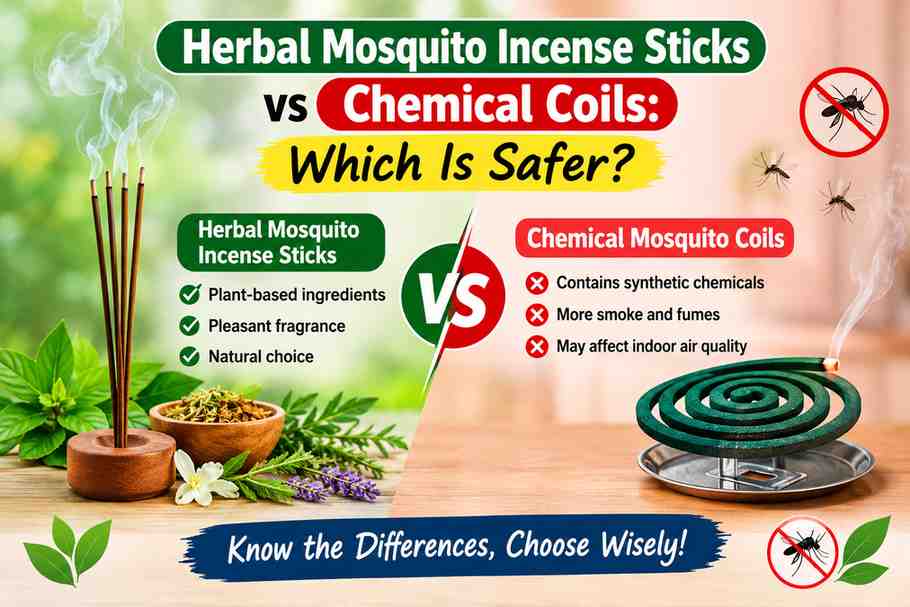
Mosquitoes are a persistent problem in many households, especially during humid seasons and monsoon months. To prevent mosquito bites and lower the risk of insect-borne illnesses, families commonly look for effective space-repellent products. Among the available options, traditional chemical coils and plant-based herbal mosquito incense sticks are two widely used products.
However, as awareness regarding indoor air quality and respiratory wellness grows, buyers are comparing these two options more closely. In this detailed guide, we will compare herbal mosquito incense sticks and traditional chemical coils, looking at their ingredients, smoke characteristics, practical usage, and safety considerations to help you make an informed decision for your home or wholesale business.
───
What Are Chemical Mosquito Coils?
Chemical mosquito coils are spiral-shaped products made primarily from pyrethrum powder, synthetic pyrethroids (such as transfluthrin or d-allethrin), binders, and combustible base materials. When lit, the coil smolders slowly, releasing active synthetic insecticidal chemicals into the air alongside continuous smoke.
Key Characteristics of Chemical Coils:
• Active Ingredients: Synthetic pyrethroids designed to knock down or kill flying insects.
• Format: Spiral shape that burns for approximately 6 to 8 hours.
• Smoke Profile: Typically releases heavy, pungent smoke and petro-chemical combustion byproducts.
• Primary Use: Widely used in outdoor or semi-open spaces due to strong emissions.
While chemical coils are low-cost and readily available, burning them in closed or poorly ventilated spaces can lead to throat irritation, eye watering, and respiratory discomfort for sensitive individuals.
───
What Are Herbal Mosquito Incense Sticks?
Herbal mosquito incense sticks (often referred to as natural mosquito agarbatti) are stick-based products made from wood powder, natural gums, and plant-derived essential oils such as citronella, lemongrass, eucalyptus, or neem extracts.
Instead of relying heavily on synthetic insecticidal active agents, these sticks utilize natural botanical fragrances that help mask human scents and deter mosquitoes within immediate surroundings.
Key Characteristics of Herbal Mosquito Incense Sticks:
• Active Ingredients: Plant-based extracts, essential oils, and organic aromatic powders.
• Format: Straight incense sticks that burn evenly for 45 to 60 minutes.
• Smoke Profile: Herbal Mosquito Incense Sticks Produces aromatic smoke with herbal, refreshing fragrances.
• Primary Use: Popular for household balconies, living areas, and general store retail sales.
───
Key Comparison: Herbal Mosquito Incense Sticks vs Chemical Coils
To help you understand the core differences clearly, here is a direct comparison between the two formats:
Parameter
Chemical Mosquito Coils
Herbal Mosquito Incense Sticks
Primary Formulation
Synthetic pyrethroids & petro-binders
Plant extracts, essential oils & wood base
Aroma & Fragrance
Strong, pungent chemical smell
Natural herbal fragrances (Lemongrass/Citronella)
Burn Duration
6 to 8 hours continuous
45 to 60 minutes per stick
Smoke Density
High, dense smoke
Light to moderate aromatic smoke
Indoor Suitability
Requires high external ventilation
Suitable for ventilated rooms & open areas
Target Buyer Group
Traditional budget consumers
Modern households, organic buyers & retailers
───
Comparing Safety Considerations: Which Option is Better?
When evaluating safety, it is essential to understand that burning any combustion product releases airborne particulate matter and smoke. No incense stick or coil should ever be claimed as completely risk-free or 100% safe for unventilated indoor spaces.
1. Indoor Air Quality & Emissions
Chemical coils release volatile organic compounds (VOCs) and synthetic residues that can linger on indoor fabrics and furniture. Herbal mosquito incense sticks generally emit lighter smoke infused with plant oils, making the ambient scent more pleasant. However, proper room ventilation remains necessary regardless of which product you burn.
2. Respiratory Comfort
Individuals with pre-existing asthma, seasonal allergies, or smoke sensitivity often report higher discomfort around synthetic coil fumes. While herbal fragrance sticks are generally considered more acceptable due to natural aromas, direct inhalation of any smoke should always be avoided.
3. Child and Pet Safety
Neither coils nor herbal sticks should be burnt near infants, young children, or household pets in enclosed spaces. Unburnt sticks should always be stored out of children’s reach, and burning sticks must be placed on stable, heat-resistant holders away from flammable items like curtains.
───
Practical Usage Tips for Maximum Effectiveness
To achieve the best results without compromising household air quality, consider the following practical guidelines:
1. Ensure Ventilation: Never burn coils or mosquito sticks in completely sealed or windowless rooms. Always allow sufficient airflow.
2. Proper Placement: Position burning sticks near entry points like doorways, windows, or balconies to deter mosquitoes from entering.
3. Combine Prevention Methods: Use repellent sticks alongside mechanical barriers like window screens, door nets, and removing stagnant water around the premises.
4. Choose Quality Products: Check labels for ingredients, usage warnings, and manufacturer details before making a purchasing decision.
───
Purchasing Guidance for Retailers and Wholesale Buyers
For shopkeepers, general store operators, and commercial distributors, stocking the right mosquito-management inventory is key to meeting changing consumer demands. Modern retail customers are increasingly asking for herbal and stick-format alternatives alongside traditional products.
When buying in bulk, wholesalers should compare packaging quality, stick consistency, price per dozen or carton, and delivery terms. To view product details, pricing lists, and bulk ordering terms for commercial distribution, visit our Mosquito Agarbatti Wholesale Information Page to explore available supply options.
───
Frequently Asked Questions (FAQs)
Are herbal mosquito incense sticks completely safe for indoor use?
No burning Herbal Mosquito Incense Sticks product that produces smoke should be considered completely risk-free. While herbal sticks use plant-based extracts and aromatic oils, they still produce smoke when smoldering. Always ensure good room ventilation and avoid direct smoke inhalation.
Do chemical coils kill mosquitoes better than herbal sticks?
Chemical coils contain synthetic pyrethroids designed to knock down or kill insects in close proximity. Herbal sticks rely primarily on plant-based vapors to repel or deter mosquitoes from living areas.
Can I burn mosquito repellent sticks in an air-conditioned room?
It is not recommended to burn any combustion product in an enclosed AC room with closed windows, as smoke particles can accumulate in the recirculated air.
What should wholesale buyers check before ordering mosquito agarbatti?
Retailers and distributors should review ingredient labels, stick burn time, packaging durability, minimum order quantities (MOQ), tax/GST terms, and landed delivery pricing.
───
Conclusion
Before purchasing any mosquito-repellent product, read the label, check the manufacturer’s information, and follow the safety instructions. If you want to reduce indoor smoke exposure, consider mosquito nets, window screens, and other non-burning prevention methods.
Ultimately, an informed choice is better than relying on marketing claims. The goal is to manage mosquitoes effectively while also paying attention to indoor air quality and household safety. Whether you are buying for household use or sourcing products for your retail business, evaluating ingredients, using products responsibly, and ensuring adequate ventilation will help you achieve a cleaner, safer home environment.